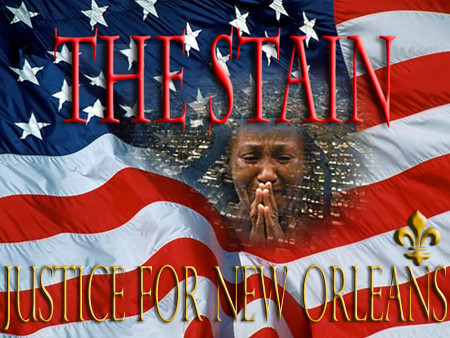
Let every American, every lover of liberty, every well wisher to his posterity, swear by the blood of the Revolution, never to violate in the least particular, the laws of the country; and never to tolerate their violation by others.

As the patriots of seventy-six did to the support of the Declaration of Independence, so to the support of the Constitution and Laws, let every American pledge his life, his property, and his sacred honor; let every man remember that to violate the law, is to trample on the blood of his father, and to tear the charter of his own, and his children's liberty.

Let reverence for the laws, be breathed by every American mother, to the lisping babe, that prattles on her lap; let it be taught in schools, in seminaries, and in colleges; let it be written in Primers, spelling books, and in Almanacs; let it be preached from the pulpit, proclaimed in legislative halls, and enforced in courts of justice. And, in short, let it become the political religion of the nation; and Let the old and the young, the rich and the poor, the grave and the gay, of all sexes and tongues, and colors and conditions, sacrifice unceasingly upon its altars.

While ever a state of feeling, such as this, shall universally, or even, very generally prevail throughout the nation, vain will be every effort, and fruitless every attempt, to subvert our national freedom.


- Abraham Lincoln, January 27, 1838
  Address Before the Young Men's Lyceum of Springfield, Illinois

Tuesday, September 02, 2008

Vive NOLA!


Washington Post: In the Big Empty, a Calm After The Storm

"It was a good strange"

It was so quiet. Where there was power, the street lights dutifully blinked green and red for no one. The interstate was an elevated curving channel of void. The toll barrier on the bridge over the Mississippi River was untended, offering a $1 break to no takers. New Orleans after Gustav was like a post-apocalyptic thought experiment without the apocalypse. Does a city exist if no one is there to experience it?

Labels: , , ,

Thursday, August 30, 2007

Harry Connick Jr. in New Orleans September, 2005

Labels: , , , , , ,

Disconnected

Labels: , , , , , , ,

Drowned in their homes


In memory and in still-raw grief for all of those who lost their lives two years ago on this day.

Louisiana, Louisiana
They're tryin to wash us away
Oh Louisiana, Louisiana
They're tryin to wash us away

Randy Newman (Louisiana 1927)

Labels: , , ,

Another time, another hurricane... a different president

"This is your President!" Johnson announced. "I'm here to help you!"

In September of 1965, Hurricane Betsy slammed into New Orleans. Winds gusted up to 165 miles per hour and the levees failed, flooding much of New Orleans. Somewhere around 250,000 people were forced from their homes in what was, to date, the worst disaster to hit NOLA since the turn of the century.

The day after Betsy's landfall, President Lyndon Johnson got a phone call from Louisiana Senator Russell Long, asking if LBJ would come to the city. Within hours, LBJ was on on a plane:

Even at the airport, Johnson began to get a sense of the damage wrought by Betsy. "Parts of the roofing of the terminal were torn away and several of the large windows were broken," the diary reads. "The members of the Presidential party had seen from the air a preview of the city — water over 3/4 of the city up to the eaves of the homes, etc." At the urging of the mayor of New Orleans — a diminutive conservative Democrat named Victor Hugo Schiro, whom Johnson referred to as "Little Mayor" — the President decided to tour the flooded areas. His motorcade stopped on a bridge spanning the Industrial Canal, in the eastern part of the city, and from there the Presidential party saw whole neighborhoods engulfed by floods. They could see, according to the diary, that "people were walking along the bridge where they had disembarked from the boats that had brought them to dry land. Many of them were carrying the barest of their possessions and many of them had been sitting on top of their houses waiting for rescue squads to retrieve the families and carry them to dry land." Johnson talked with a seventy-four-year-old black man named William Marshall and asked about what had happened and how he was getting along. As the conversation ended, Marshall said, "God bless you, Mr. President. God ever bless you."

In the Ninth Ward, Johnson visited the George Washington Elementary School, on St. Claude Avenue, which was being used as a shelter. "Most of the people inside and outside of the building were Negro," the diary reads. "At first, they did not believe that it was actually the President." Johnson entered the crowded shelter in near-total darkness; there were only a couple of flashlights to lead the way.

"This is your President!" Johnson announced. "I'm here to help you!"

The diary describes the shelter as a "mass of human suffering," with people calling out for help "in terribly emotional wails from voices of all ages. . . . It was a most pitiful sight of human and material destruction." According to an article by the historian Edward F. Haas, published fifteen years ago in the Gulf Coast Historical Review, Johnson was deeply moved as people approached and asked him for food and water; one woman asked Johnson for a boat so that she could look for her two sons, who had been lost in the flood.

"Little Mayor, this is horrible," Johnson said to Schiro. "I've never seen anything like this in my life." Johnson assured Schiro that the resources of the federal government were at his disposal and that "all red tape [will] be cut."

The President flew back to Washington and the next day sent Schiro a sixteen-page telegram outlining plans for aid and the revival of New Orleans. "Please know," Johnson wrote, "that my thoughts and prayers are with you and the thousands of Louisiana citizens who have suffered so heavily."

Labels: , , ,

Australian paper cites 'Third World response' to Katrina


News from Australia, with striking comment about US Federal response:

Two years on, New Orleans seething over Katrina

By North America correspondent Kim Landers

Posted August 30, 2007 08:42:00
Updated August 30, 2007 10:20:00


Two years on, the residents of New Orleans are still angry about the response to Hurricane Katrina.

Two years after the devastation of Hurricane Katrina, people in New Orleans are still frustrated with the slow place of recovery.

At the time the wild storm left thousands of residents stranded on rooftops, while others made do in sub-standard shelters.

America was criticised for initially mounting a Third World response to a massive domestic crisis.

Katrina's second anniversary is an opportunity for New Orleans to recapture the national spotlight and to show the rest of the country how it has rebuilt itself and what still needs to be done.

In New Orleans two-thirds of the residents are back - the French Quarter survived Katrina and the music and restaurant scenes are recovering.

But few neighbourhoods are thriving, much of the city looks like a wasteland and businesses and homes are still abandoned.

Guess the 'Third World response' hasn't really changed much in two years.

Labels: , , , , , ,

Promises unkept

New Orleans 2 Years After Katrina

Labels: , , , ,

Wednesday, August 29, 2007

Message from the Gulf Coast

Labels: , , , , ,

Sunday, August 26, 2007

Do You Know What It Means To Miss New Orleans?


Do you know what it means to miss New Orleans
And miss it each night and day
I know I'm not wrong
This feelings gettin stronger
The longer, I stay away
Miss them moss covered vines...the tall sugar pines
Where mockin birds used to sing
And I'd like to see that lazy Mississippi
Hurryin into spring
The moonlight on the bayou
A creole tune that fills the air
I dream about magnolias in bloom
And I'm wishin I was there

Two years this week since Katrina made landfall, spared New Orleans... only so it could drown by governmental neglect. Two years and I'm still not over it - and I don't even live there, although a piece of my heart drowned with the city.

This week I will be writing about New Orleans, the Gulf Coast, and the continuing neglect. I once had an entire blog devoted to Katrina and the aftermath. I tried to move on, but the pain is - today - as raw as it was two years ago. Betrayal is like that.


And where is our government? Absent. Uncaring. AWOL.

As the Washington Post so scathingly put it:

Two full years after the hurricane, the Big Easy is barely limping along, unable to make truly meaningful reconstruction progress. The most important issues concerning the city's long-term survival are still up in the air. Why is no Herculean clean-up effort underway? Why hasn't President Bush named a high-profile czar such as Colin Powell or James Baker to oversee the ongoing disaster? Where is the U.S. government's participation in the rebuilding?

And why are volunteers practically the only ones working to reconstruct homes in communities that may never again have sewage service, garbage collection or electricity?

Eventually, the volunteers' altruism turns to bewilderment and finally to outrage. They've been hoodwinked. The stalled recovery can't be blamed on bureaucratic inertia or red tape alone. Many volunteers come to understand what I've concluded is the heartless reality: The Bush administration actually wants these neighborhoods below sea level to die on the vine.


In the end, that is what keeps me here; keeps me in the blogging trenches day after day. New Orleans. My anger, pain, bewilderment, sadness and outrage. And I won't rest until there is justice for that beloved city.

Labels: , , , , ,

Thursday, June 21, 2007

Hell YES it was Katrina


You know, I'll be the first to admit that I was slacking prior to Katrina.

It wasn't that I was somehow oblivious to the lawlessness of the Bush Administration, the war in Iraq, or the general direction our country is headed (straight off a cliff.) On the contrary, I was so horrified and disgusted that I refused to watch any more; it was making me crazy.

It still makes me crazy. But what woke me up to my own citizen responsibility - to speak out at least - was watching the fallout from Katrina.

I don't recall that our Federal government has ever completely abandoned a major American city - left it to die - while an American president refused to even break off his vacation. I'm not sure anyone in the world could imagine that this 'global super power' could fail to even pass out water bottles. Everyone was watching, network anchors were tearing their hair, and in some cases crying on the air... but still, nobody came.

The entire world looked on in rapt amazement as the United States government fell flat on its face, on a truly epic scale... and then refused to accept any help.

So is there any conceivable doubt that Katrina lingers in our subconscious, as a major contributing factor in our general discontent?

Show of hands: how many of us have been to New Orleans at some point in our lives? Maybe on a business trip (if so, you've probably visited the Convention Center,) or for Mardi Gras, or for a Super Bowl, or perhaps to take in their famous jazz festival?

New Orleans was the birthplace of Jazz! And of course, there is the food... I can almost taste the gumbo and smell the steaming hot, banana bread pudding. Ah New Orleans. It was completely unique, completely itself. There was - and still is - no other American city quite like it.

And yet, in the wake of the worst natural disaster this nation has ever seen, it was completely abandoned by our Federal government.

So I may have been a little frustrated, a little annoyed, when I saw that John Zogby (of Zogby polling fame) seemed a bit apologetic when countering the apparent popular (media) belief that American citizens are only upset about the war.

Perhaps I was steamed by his use of the apologetic "I realize this may be a stunning statement" before launching into his argument that the elephant in the middle of the room is - in fact - an elephant in the middle of the room.

New Orleans is still down there; and much of it still looks as though the storm blew through yesterday. And we somehow haven't noticed this?

I know I should be grateful that someone, somewhere, remembered Katrina at all; and drew a comparison between our vague discomfort before the storm, and our screaming outrage afterwards. The national media has forgotten all about Katrina (and especially the ongoing plight of New Orleans,) save perhaps for Anderson Cooper, who still brings it up from time to time.

But then Anderson hasn't quite recovered from his outrage either.

I'm sorry Mr. Zogby -- no disrespect, and thank you for bringing this up. I'm not usually this disagreeable. It's just that Katrina, the subsequent flooding of New Orleans and the weeks of chaos, ineptitude and horror still haunt me. I can close my eyes and still see dead bodies lying on street corners - streets that I once walked - and see helpless, stranded dogs in trees. This tends to make me just a little bit crabby.

Zogby: In the shadow of these mammoth international problems are domestic concerns: health care, Social Security reform, the environment. But these issues pale in the face of a widespread sense of real trouble ahead for America. Barely 30 percent think the nation is now headed in the right direction, and 73 percent say the U.S is in a serious crisis, according to our recent polling.

This suggests a need to redefine the very nature and structure of U.S. federalism. In our post-Katrina polling, we found a hunger nationwide for a new model for the federal government. In many ways, I believe Katrina, over the long haul, will prove to be more of a defining moment in American history than the terrorist attacks of Sept. 11, 2001.

I realize this may be a stunning statement and that I may be a little ahead of the polls on this, because a poll provides us with a snapshot in time. But there is a trend pointing to this conclusion. While sour memories of the post-Katrina failures have dimmed, the hunger for a better government model has not. The implications for the 2008 presidential election are fascinating.

Our polling shows that Sept. 11, 2001 and its aftermath left a majority of Americans resigned to the idea that we will face another major attack on our own soil. It is, to a certain extent, out of our control. Likely because response to that attack required efforts that were largely limited to the several blocks around the World Trade Center and the Pentagon, governmental response was relatively straightforward, and was largely regarded as a success.

But Katrina was different. It involved an entire region, and revealed a dramatic structural failure of our system of government.

Ultimately, the failures sent a single message to America: the United States is not prepared for a major disaster, natural or otherwise.

The feds get the most blame because they are seen as the government solution of last resort. When the governments of New Orleans and Louisiana failed in the run-up to, and aftermath of, the storm, Washington acted more like the error-prone Little Leaguer you try to hide in right field than the superhero swooping in to save the day.

And so the 2008 presidential campaign is being waged against a backdrop of national unease over Washington’s competence. With the candidates already pretty well-defined on the dominating issue of the Iraq war, the winner may be the one who best defines a new role for how Washington performs when crisis strikes here at home. Americans want the job done, and done right, and the candidate who successfully outlines a plan for national unity and a marshaling of resources is going to have a decided edge.

He still doesn't completely get it. Perhaps we also want a government that actually cares about the people - all of us, from sea to shining sea - rather than simply earmarks and corporate profits. Perhaps Katrina was the graphic demonstration of something we should have realized years ago: our Federal Government only cares about the lobbyists it represents, not the people who cast the votes.

Labels: , , , ,