Classic Jon Stewart
| The Daily Show With Jon Stewart | M - Th 11p / 10c | |||
| Baracknophobia - Obey | ||||
| ||||
Labels: Barack Obama, corruption, Dick Cheney, George W. Bush, GOP, Jon Stewart, President Obama, The Daily Show, tyranny

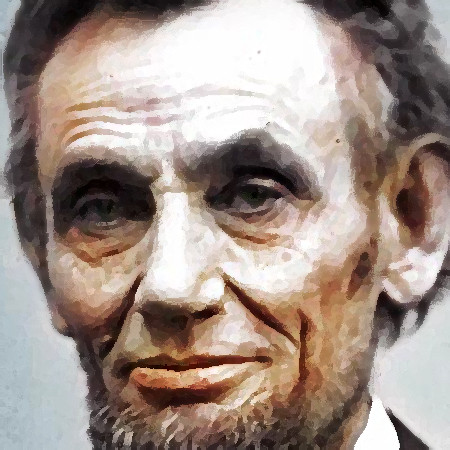
Let every American, every lover of liberty, every well wisher to his posterity, swear by the blood of the Revolution, never to violate in the least particular, the laws of the country; and never to tolerate their violation by others.
As the patriots of seventy-six did to the support of the Declaration of Independence, so to the support of the Constitution and Laws, let every American pledge his life, his property, and his sacred honor; let every man remember that to violate the law, is to trample on the blood of his father, and to tear the charter of his own, and his children's liberty.
Let reverence for the laws, be breathed by every American mother, to the lisping babe, that prattles on her lap; let it be taught in schools, in seminaries, and in colleges; let it be written in Primers, spelling books, and in Almanacs; let it be preached from the pulpit, proclaimed in legislative halls, and enforced in courts of justice. And, in short, let it become the political religion of the nation; and Let the old and the young, the rich and the poor, the grave and the gay, of all sexes and tongues, and colors and conditions, sacrifice unceasingly upon its altars.
While ever a state of feeling, such as this, shall universally, or even, very generally prevail throughout the nation, vain will be every effort, and fruitless every attempt, to subvert our national freedom.- Abraham Lincoln, January 27, 1838
Address Before the Young Men's Lyceum of Springfield, Illinois
| The Daily Show With Jon Stewart | M - Th 11p / 10c | |||
| Baracknophobia - Obey | ||||
| ||||
Labels: Barack Obama, corruption, Dick Cheney, George W. Bush, GOP, Jon Stewart, President Obama, The Daily Show, tyranny
Labels: assassination, corporate media, Democracy Now, Dick Cheney, independent media, media, Seymour Hersh

Labels: Dick Cheney, It's a Wonderful Life, Mr. Potter, Potter
Addington wrote in Gonzales’ signature line while re-authorizing Bush’s warrantless wiretapping program
In 2004, after top Justice Department lawyers refused to re-certify the legality of President Bush’s warrantless wiretapping program, the Bush administration re-authorized the program anyway without the Justice Department’s approval. Previous accounts of the program’s re-authorization reported that the “line for the attorney general’s signature remained blank.”
But in the Washington Post today, Barton Gellman reports that Vice President Cheney’s lawyer, David Addington, actually signed then-White House Counsel Alberto Gonzales’s name to the document’s signature line:Addington opened the code-word-classified file on his computer. He had a presidential directive to rewrite.
It has been widely reported that Bush executed the March 11 order with a blank space over the attorney general’s signature line. That is not correct [15]. For reasons both symbolic and practical, the vice president’s lawyer could not tolerate an empty spot where a mutinous subordinate should have signed. Addington typed a substitute signature line: “Alberto R. Gonzales.”
Gellman writes that “Only Richard M. Nixon, in an interview after leaving the White House in disgrace, claimed authority so nearly unlimited” as the authority Addington claimed for the president in the document he signed with Gonzales’ name.
Labels: Alberto Gonzales, David Addington, Dick Cheney, warrantless wiretapping
By Bruce Fein
Tuesday, September 16, 2008
COMMENTARY:
If the United States neglects to rethink its purpose informed by the genius and practice of the Founding Fathers, it is destined to self-destruct like every other empire from hubris and overreach. At present, the Republic is undergoing a metamorphosis into executive despotism featuring escalating taxes and permanent warfare because of staggering ignorance of the nation's birth certificate among officeholders, candidates and the public.
The Constitution's preamble explains that the national interest of the United States lies in providing for the "common defense" and "secur[ing] the blessings of liberty to ourselves and our posterity." The Founding Fathers denied that the United States was saddled with either a moral or legal responsibility to implant freedom throughout the planet.
None ever hinted at a national duty to overthrow the French Bourbons, the Russian Romanovs, or the Ottoman Sultans. Nor did they believe Americans would be made either safer or freer by attempting to cram American democracy down the throats of feudalistic, tribal, sectarian or autocratic foreign political cultures, for example, Afghanistan, Iraq, Russia or China. The exercise would be futile because the knowledge needed to pluck the flower of democracy from the nettle of longstanding tyranny is beyond human grasp.
Further, these utopian larks would make Americans less safe and less free. Military interventions abroad make enemies by the inevitable killing of innocent civilians in pursuit of actual enemies. Think of the mounting "collateral damage" deaths in Afghanistan or Iraq. Resentments are also awakened by the insult to national dignity implicit in American military bases or occupation forces - a variation of "The Ugly American" by Eugene Burdick and William Lederer.
In addition, the trillions of dollars squandered in foreign military frolics subtract from fashioning a virtually invulnerable defense posture at home earmarked by spy satellites and aircraft, anti-missile systems, submarines, upgraded border security, sophisticated intelligence collection, and a credible threat to destroy any enemy nation with the audacity to attack.
Finally, the military exertions necessary to effectuate an endless American crusade for democracy abroad would be the death knell of the republic. War endows the president with invincible power at home. He controls the public record of information through selective disclosures of classified intelligence. He awards military honors and contracts. And he commands popular political support by exploiting the natural patriotism and fears of Americans that he manufactures by logarithmically inflating foreign threats.
A president with unchecked authority spies on political opponents, flouts the rule of law, cripples the congressional power of oversight, and, arbitrarily detains, harasses or punishes citizens or noncitizens alike on his say-so alone.
In sum, the United States would have become a mirror of the tyranny that provoked the Declaration of Independence if its mission was the global expansion of liberty.
President Bush epitomizes the light years the United States has traveled from its more modest founding purpose and the Constitution's injunctions. Bob Woodward reports in his new book "The War Within": "The opportunity to spread freedom throughout the globe, and particularly in the broader Middle East and in the Muslim world," [Bush's National Security Adviser Stephen] Hadley said that day, "that is, I think for the president, the defining idea of his presidency... it is not only a sort of moral duty, it's not only consistent with our principles, it's consistent with our interests, it's actually essential for our national security. ... For liberty to be secure at home, liberty has to be on the march abroad. Big stuff. Not big. Huge." But President Bush's ambitions are also delusional, ill-founded and extra-constitutional.
Not a syllable in the Constitution or Declaration of Independence, however, suggests the president has either the duty or authority to carry freedom to the four corners of the Earth. And Mr. Bush's concoction of a moral obligation is unconvincing. The United States did not create the dictatorships, autocracies or lawlessness that afflict Egypt, Libya, Sudan, Somalia, Zimbabwe, Eritrea, Ethiopia or Syria. It is not morally bound to relieve afflictions it did not create.
Further, that messianic task would contradict the nation's principles as expounded by the Founding Fathers. Then Secretary of State John Quincy Adams in his July 4, 1821, address amplified: "[The United States] has abstained from interference in the concerns of others, when the conflict has been for principles to which she clings. ... She goes not abroad in search of monsters to destroy. She is the well-wisher to the freedom and independence of all. She is the champion and vindicator only of her own. ... She might become the dictatress of the world: she would be no longer the ruler of her own spirit."
In addition, liberty in the United States can thrive irrespective of foreign dictators or despots. The suppression of human rights in Burma, Venezuela, Iran or North Korea does not undermine enforcement of the Bill of Rights.
To be sure, nations that honor democracy are less likely to attack the United States. But nondemocracies can be deterred by the threat of incineration a la Hiroshima or Nagasaki coupled with enhanced defense technologies and intelligence. Moreover, the United States does not know how to evolve democracies from political cultures barren of democratic DNA.
Alarming theories of national purpose and interests are propounded by President Bush, Vice President Dick Cheney and the 2008 Republican and Democratic Party contenders for the White House. Those grandiose ideas clearly demonstrate the quartet would have been Tories opposed to the American Revolution. They would have been denied admission to the ranks of the Minutemen as fifth columnists. They would have been excluded from the Constitutional Convention as unfit. None can be trusted to recapture the republican principles of the Founding Fathers needed to frustrate executive despotism.
Bruce Fein is a constitutional lawyer with Bruce Fein & Associates, Inc. and author of "Constitutional Peril: The Life and Death Struggle for our Constitution and Democracy" (Palgrave Macmillan).
Labels: Bruce Fein, Constitution, Dick Cheney, George W. Bush, Washington Times

Somewhere in Gotham, the Batphone rings. Loyal butler Alfred (played by Robert Byrd) summons Bruce Wayne ( Leahy). It's Commissioner Gordon on the line, and the news is grim: A villainous alliance has been formed by the Riddler (Karl Rove), the Penguin (Dick Cheney), the Joker (Alberto Gonzales) and Catwoman (Harriet Miers).
The fearsome foursome has brainwashed the previously incorruptible White House counsel (Fred Fielding), and the villains are trying to take over the American government through wanton and reckless claims of executive privilege. The latest sign of doom: Fielding has missed yet another deadline to respond to Senate subpoenas probing a secret eavesdropping program.
Enter the caped crusader, who has flown in from Vermont wearing a Batman-gray business suit and Batman-black loafers. He strikes back at Gotham's criminal masterminds with his signature weapon: the news conference. Meeting reporters in the Judiciary Committee hearing room, the Dark Knight encounters so many Batmicrophones on his Batlectern that he has to hold his Batspeech in his hands.
"The administration has produced no documents!" Leahy growled.
POW!
"No adequate basis for noncompliance!"
BANG!
"No privilege claims!"
BOP!
"No complete privilege log!"
BING!
Aspiring superhero Leahy came up short when asked at a news conference yesterday what specific weapon he might use to force the White House to comply. But he left little doubt that, if the ne'er-do-wells continue to defy him, he may give the White House another good scolding when Congress returns from recess. And -- who knows? -- he may bring Robin the Boy Wonder (played by Chuck Schumer).
Labels: Dick Cheney, Senator Chuck Schumer, Senator Patrick Leahy
Vice President Cheney's office acknowledged for the first time yesterday that it has dozens of documents related to the administration's warrantless surveillance program, but it signaled that it will resist efforts by congressional Democrats to obtain them.
The disclosure by Cheney's counsel, Shannen W. Coffin, came on the day that the Senate Judiciary Committee had set as a deadline for the Bush administration to turn over documents related to the wiretapping program, which allowed the National Security Agency to monitor communications between the United States and overseas without warrants.
Labels: Dick Cheney, NSA wire-tapping, Senator Patrick Leahy, warrantless wiretapping
Labels: Dick Cheney, Jon Stewart, The Daily Show
Labels: Daily Kos, Dick Cheney, YouTube

The Senate, in a high-stakes showdown over national security, voted late Friday to temporarily give President Bush expanded authority to eavesdrop on suspected foreign terrorists without court warrants.
The House, meanwhile, rejected a Democratic version of the bill.
Democratic leaders there were working on a plan to bring up the Senate-passed measure and vote on it Saturday in response to Bush's demand that Congress give him expanded powers before leaving for vacation this weekend.
The White House applauded the Senate vote and urged the House to quickly follow suit.
The bill "will give our intelligence professionals the essential tools they need to protect our nation," said White House spokesman Tony Fratto. "It is urgent that this legislation become law as quickly as possible."
Senate Democrats reluctantly voted for a plan largely crafted by the White House after Bush promised to veto a stricter proposal that would have required a court review to begin within 10 days.
A furious push by the White House to broaden its wiretapping authority appeared on the verge of victory on Friday night after the Senate approved a measure that would temporarily give the administration more latitude to eavesdrop without court warrants on foreign communications that it suspects may be tied to terrorism.
The House is expected to take up the White House-backed measure on Saturday morning before going into its summer recess.
Democratic leaders acknowledged that the bill would probably pass.
Democrats in both the House and the Senate failed to pass competing measures on Friday that would have included tougher judicial checks and oversight on the eavesdropping powers.
The White House and Congressional Republicans hailed the Senate vote as critical to plugging what they saw as dangerous gaps in the intelligence agencies’ ability to detect terrorist threats.
“I can sleep a little safer tonight,” Senator Christopher S. Bond, the Missouri Republican who co-sponsored the measure, declared after the Senate vote.
Aug. 1, 2007 - A secret ruling by a federal judge has restricted the U.S. intelligence community's surveillance of suspected terrorists overseas and prompted the Bush administration's current push for "emergency" legislation to expand its wiretapping powers, according to a leading congressman and a legal source who has been briefed on the matter.
The measure “goes far, far beyond” the National Security Agency program that the president secretly approved after the Sept. 11, 2001, attacks, said Senator Russ Feingold, Democrat of Wisconsin.
Caroline Frederickson, head of the American Civil Liberties Union office here, said: “The Democrats caved in to the politics of fear we’re seeing from this administration. They didn’t want to be depicted as soft on terrorism. But this measure removes any court oversight from surveillance on Americans in a large number of cases.”
Democrats agreed the law should not restrict U.S. spies from tapping in on foreign suspects. However, they initially demanded the FISA court to review the eavesdropping process before it begins to make sure that Americans aren't targeted.
By the final vote, Senate Democrats had whittled down that demand and approved a bill that largely mirrored what the Bush administration wanted.
Before the vote, Democrats excoriated the GOP plan, which Sen. Jay Rockefeller, D-West Virginia, said "provides a weak and practically nonexistent court review."
Sen. Russ Feingold, D-Wisconsin, angrily chastised his colleagues for bending to the administration's will.
"The day we start deferring to someone who's not a member of this body ... is a sad day for the U.S. Senate," Feingold said. "We make the policy -- not the executive branch."
Likewise, civil liberties advocates said they were outraged that Democratic-led Senate would side with the White House.
"We're hugely disappointed with the Democrats," said Caroline Fredrickson, legislative director for the American Civil Liberties Union. "The idea they let themselves be manipulated into accepting the White House proposal, certainly taking a great deal of it, when they're in control -- it's mind-boggling."
Labels: Dick Cheney, FISA, George W. Bush, GOP, Senate
Carmona told lawmakers that, as he fought to release the document, he was "called in and again admonished . . . via a senior official who said, 'You don't get it.' " He said a senior official told him that "this will be a political document, or it will not be released."

Three people directly involved in its preparation said its publication was blocked by William R. Steiger, a specialist in education and a scholar of Latin American history whose family has long ties to President Bush and Vice President Cheney. Since 2001, Steiger has run the Office of Global Health Affairs in the Department of Health and Human Services.
Labels: Bushies, Dick Cheney, George W. Bush, heath care, Richard Carmona, William R. Steiger
Labels: Alberto Gonzales, Congress, Dick Cheney, George W. Bush, House Judiciary Committee, Senate, Senate Judiciary Committee

He can't agree or disagree? Huh?
Specter: How can you get approval from sedated Ashcroft?
Gonzales: Can I continue?
Specter: No, answer my question.
Gonzales: Obviously there was concern about Ashcroft's condition. There are no rules governing when Ashcroft decides he is well enough.
Specter: He had given us AG duties.
Gonzales: We knew he was ill...
Specter: Not making progress. Moving on. Do you think constitution govt can survive if Pres has unilateral authority to reject congress inquiries for Exec Privilege and prevent prosecution of claim?
Gonzales: Ongoing matter, I am recused, I cannot answer.
Specter: I am asking about constitutional law.
Gonzales: You are talking about an on-going issue.
Specter: No. Answer.
Gonzales: I won't answer - it is ongoing controversy and I am recused.
Leahy: Calls for decorum (room is protesting).
Specter: Won't pursue. This is hopeless. You are not just AG, you are a lawyer. This is a fundamental issues separate from USA resignations. Other subject. Do you have a conflict regarding the firing of US AGs?
Gonzales: Yes.
Specter: Do you have a conflict of interest about Miers?
Gonzales: Yes. I won't answer.
Specter: Let's find one you will answer. How about death penalty case? Charlton contacted your office and said case was not appropriate for dp. Testimony that AG spent 5-10 minutes on the issue...is this accurate?
Gonzales: I have no specific recollection of this case. But we have a detailed process for capital case review.
Specter: I am not interested in that. I want an answer to my question. You don't remember a case regarding a man's execution?
Gonzales: I have no recollection of the conversation.
Specter: Do you disagree with the testimony?
Gonzales: I can't agree or disagree.
Schumer: I'll let you speak in a minute, but this is serious, because you're getting right close to the edge right here. You just said there was just one program -- just one. So the letter, which was, sort of, intended to deceive, but doesn't directly do so, because there are other intelligence activities, gets you off the hook, but you just put yourself right back on here.
Gonzales: I clarified my statement two days later with the reporter.
Schumer: What did you say to the reporter?
Gonzales: I did not speak directly to the reporter.
Schumer: Oh, wait a second -- you did not.
(LAUGHTER)
OK. What did your spokesperson say to the reporter?
Gonzales: I don't know. But I told the spokesperson to go back and clarify my statement...
Schumer: Well, wait a minute, sir. Sir, with all due respect -- and if I could have some order here, Mr. Chairman -- in all due respect, you're just saying, "Well, it was clarified with the reporter," and you don't even know what he said. You don't even know what the clarification is. Sir, how can you say that you should stay on as attorney general when we go through exercise like this, where you're bobbing and weaving and ducking to avoid admitting that you deceived the committee? And now you don't even know. I'll give you another chance: You're hanging your hat on the fact that you clarified the statement two days later. You're now telling us that is was a spokesperson who did it. What did that spokesperson say? Tell me now, how do you clarify this?
Gonzales: I don't know, but I'll find out and get back to you.
Forget about the politicization of the Justice Department. Forget about the falling morale there. Forget about the rise in violent crime in some of our biggest cities. Forget about the events leading up to the U.S. Attorney scandal and the way he has handled the prosecutor purge since. Forget about the Department's role in allowing warrantless domestic surveillance. Forget about the contorted and contradictory accounts he's offered before in his own defense.
Attorney General Alberto R. Gonzales deserves to be fired for his testimony Tuesday alone; for morphing into Jon Lovitz's famous "pathological liar" character (or maybe just one of the Marx Brothers) as he tried to dodge and duck responsibility before the Senate Judiciary Committee not just for his shameful leadership at Justice but also his shameless role in visiting an ailing John Ashcroft in the hospital to try to strong-arm him into renewing the warrantless surviellance program. Can anyone out there remember a worse, less-inspiring, less confidence-inducing performance on Capitol Hill? I cannot.
Senator Sheldon Whitehouse (D-RI) questioned the Attorney General about the independence of the Justice Department and communications with the White House on pending cases or investigations.
He then pointed to a May 4, 2006 memorandum signed by Gonzales which showed that the Office of the Vice President had been granted parallel privileges with the Executive Office of the President on communicating directly with the Justice Department's staff on criminal and civil matters.
"What - on earth - business does the Office of the Vice President have in the internal workings of the Department of Justice with respect to criminal investigations, civil investigations, and ongoing matters?" the Senator asked.
Gonzales was stumped, "As a general matter, I would say that's a good question."
Whitehouse then pointed out that in the same memo, the Chief of Staff and Counsel of the Vice President were also explicitly granted the same authority.
"On its face - I must say - sitting here, I'm troubled by this," Gonzales added.

In addition to granting the staff of the Office of the Vice President the ability to communicate with the Justice Department on civil and criminal matters, Gonzales' May 2006 memo gave Cheney's staff the ability to raise another issue with the Justice Department: 'Presidential Clemency Matters.'
Whether or not Cheney's office has intervened in discussions relating to presidential clemency has been of interest to Congress in recent weeks.
Before the White House commuted the sentence of former Cheney Chief of Staff I. Lewis "Scooter" Libby, Reps. John Conyers (D-MI) and Jerrold Nadler (D-NY) of the House Judiciary Committee asked Cheney to recuse himself from internal White House deliberations on the subject.
White House spokesman Tony Snow did not rule out Cheney's engagement in the discussions on Libby when he discussed Bush's decision earlier in the month.
Labels: Alberto Gonzales, Dick Cheney, George W. Bush, Senator Arlen Specter, Senator Charles Schumer, Senator Patrick Leahy, Senator Sheldon Whitehouse
Labels: censure, Dick Cheney, George W. Bush, Impeachment, Senator Russ Feingold
Here is a little background on the judge who chose to dismiss this case:Washington, DC -- Earlier today, District of Columbia District Court Judge John D. Bates dismissed Joe and Valerie Wilson's civil suit against Vice President Dick Cheney, presidential aide Karl Rove, I. Lewis "Scooter" Libby and Richard Armitage. While Judge Bates recognized that the Wilsons' claims "pose important questions relating to the propriety of actions undertaken by our highest government officials," he dismissed their suit on a threshold legal issue: that there is no constitutional remedy available to them.
While the Wilsons' lawyers are reviewing the decision, they anticipate filing an appeal. Melanie Sloan, executive director of Citizens for Responsibility and Ethics in Washington ("CREW"), one of the Wilsons' lawyers, said today, "While we are obviously very disappointed by today’s decision, we have always expected that this case would ultimately be decided by a higher court." Sloan continued, "We disagree with the court's holding and intend to pursue this case vigorously to protect all Americans from vindictive government officials who abuse their power for their own political ends."
Arguments for dismissal were the following:On December 9, Judge John D. Bates of the U.S. District Court for the District of Columbia ruled that Congress' watchdog, the General Accounting Office (GAO), led by Comptroller General David M. Walker, lacked standing to sue Vice President Dick Cheney for access to the records of the energy task force. In his ruling, Judge Bates stated that "[t]here is no doubt here that the issues framed by the parties invoke core separation of powers questions at the heart of the relationship among the three branches of our government."
Judge Bates added that, in his assessment of whether the Comptroller General has asserted a sufficient injury to establish standing, "the Court must therefore be mindful that the standing inquiry should be 'especially rigorous' because reaching the merits of this dispute could require deciding whether an action taken by one of the other branches of government was unconstitutional."
Named to the bench by President Bush, the Judge is being attacked for his decision, with some arguing that he took the easy way out by deciding the case on the jurisdictional grounds of standing, rather than on the merits. Others are critical for what they see as a crushing loss for the public's right to know, coming at a time when Americans are demanding more accountability from their government and corporate leaders.
Defendants in this action argue that two statutes, whether considered independently or in combination, counsel hesitation [to recognize a private right of action) under the special-factors analysis.The first and most important of these statutes is the Privacy Act, 5 U.S.C. § 552a (2000), which "regulate[s] the collection, maintenance, use, and dissemination of information" about individuals by federal agencies. Privacy Act of 1974, Pub. L. No. 93-579, § 2(a)(5), 88 Stat. 1896, 1896. The second statute, the Intelligence Identities Protection Act of 1982, 50 U.S.C. §§ 421-426 (2000), criminalizes the intentional public disclosure of information identifying a covert agent. Defendants contend that by enacting these statutes, Congress considered the proper recourse for individuals whose personal information has been improperly disclosed by government officials -- the alleged activity giving rise to plaintiffs' claims. Furthermore, the absence in these statutory schemes of a civil damages action against the offending officials was not inadvertent, and Congress has not plainly expressed an intention that the courts preserve Bivens remedies. Therefore, defendants argue, this Court should not imply additional damages remedies under the Constitution.
U.S. District Judge John D. Bates said that Cheney and White House aides cannot be held liable for the disclosure of information about Plame in the summer of 2003 while they were trying to rebut criticism of the administration's war efforts levied by her husband, former ambassador Joseph C. Wilson IV. The judge said such efforts were certainly part of the officials' scope of normal duties.
"The alleged tortious conduct, namely the disclosure of Mrs. Wilson's status as a covert operative, was incidental to the kind of conduct that defendants were employed to perform," Bates wrote in an opinion released this afternoon.
Bates also ruled that the court lacked the power to award damages for public disclosure of private information about Plame. The judge said that was because Plame and Wilson had failed to exhaust other remedies in seeking compensation from appropriate federal agencies for the alleged privacy violations.
Labels: Dick Cheney, George W. Bush, Karl Rove, Scooter Libby, Valarie Plame
Four score and seven years ago our fathers brought forth on this continent, a new nation, conceived in Liberty, and dedicated to the proposition that all men are created equal.

Now we are engaged in a great civil war, testing whether that nation, or any nation so conceived and so dedicated, can long endure.

I believe that banking institutions are more dangerous to our liberties than standing armies. Already they have raised up a monied aristocracy that has set the government at defiance. - Thomas Jefferson
Commercial shackles are generally unjust, oppressive, and impolitic. - James Madison
We are met on a great battle-field of that war. We have come to dedicate a portion of that field, as a final resting place for those who here gave their lives that that nation might live. It is altogether fitting and proper that we should do this.
But, in a larger sense, we can not dedicate -- we can not consecrate -- we can not hallow -- this ground. The brave men, living and dead, who struggled here, have consecrated it, far above our poor power to add or detract. The world will little note, nor long remember what we say here, but it can never forget what they did here.

It is for us the living, rather, to be dedicated here to the unfinished work which they who fought here have thus far so nobly advanced.

It is rather for us to be here dedicated to the great task remaining before us -- that from these honored dead we take increased devotion to that cause for which they gave the last full measure of devotion -- that we here highly resolve that these dead shall not have died in vain -- that this nation, under God, shall have a new birth of freedom -- and that government of the people, by the people, for the people, shall not perish from the earth.

I fully respect the anger and frustration many Americans feel with this Administration. I share much of it. But on balance, I think Congress’s time is much better spent ending the war in Iraq, conducting the oversight that was absent for the last six years, and advancing progressive legislation.

Experience hath shewn, that even under the best forms of government those entrusted with power have, in time, and by slow operations, perverted it into tyranny. - Thomas Jefferson

I see in the near future a crisis approaching that unnerves me and causes me to tremble for the safety of my country. Corporations have been enthroned and an era of corruption in high places will follow, and the money power of the country will endeavor to prolong its reign by working upon the prejudices of the people until all wealth is aggregated in a few hands and the Republic is destroyed. - Abraham Lincoln


I hope we shall crush in its birth the aristocracy of our monied corporations which dare already to challenge our government to a trial by strength, and bid defiance to the laws of our country. - Thomas Jefferson
The dogmas of the quiet past, are inadequate to the stormy present. The occasion is piled high with difficulty, and we must rise -- with the occasion. As our case is new, so we must think anew, and act anew. We must disenthrall ourselves, and then we shall save our country. - Abraham Lincoln
Labels: 2008 elections, Abraham Lincoln, corporations, Dick Cheney, George W. Bush, Impeachment, Iraq, Senator Russ Feingold, war